What Causes White Powder to Form Under Marble Tiles?
What Causes White Powder to Form Under Marble Tiles?
Powder appearing at tile joints and edges is rarely a cleaning issue — it is moisture moving through the stone from below. For Italian marble India tile installations, this guide explains the mechanism, where it shows first, and how Dush Densi Max Ultra fits into preventing it at installation.
A fine white powder showing up along the grout lines or at the edges of marble tiles a few weeks after installation often gets mistaken for dust, leftover grout residue, or a cleaning problem. It is none of these. It is moisture from beneath the tiles working its way up through the stone — and understanding exactly where it comes from changes how the problem is approached.
White powder under marble tiles is caused by efflorescence — moisture in the cement screed, sand bed, or adhesive beneath the marble dissolves mineral salts in the cement, and as this moisture migrates upward through the stone's pores and evaporates, the dissolved salts are left behind as a white, powdery deposit, typically appearing first at tile joints and edges. This is most common in the weeks to months following installation while the substrate dries out, and is worsened by humidity or an ongoing moisture source beneath the tiles. Dush Densi Max Ultra, applied at the grinding stage, closes the marble's pore structure from the top and reduces the surface pathway for this evaporation, working alongside Dush Hidro SST applied to slab backs before laying.
A Cross-Section View — Where the Moisture Actually Comes From
Beneath every marble tile sits a bedding layer — sand and cement, or a polymer-modified adhesive — that contains moisture from the wet installation process. This bedding layer also contains naturally occurring mineral salts present in cement. As the bedding dries, the moisture carries dissolved salts upward through the marble tile's pore structure, following the path of least resistance toward the surface, where the water evaporates into the air and leaves the salts behind as visible white powder.
The original structural floor — concrete slab or existing surface — may carry residual or ongoing ground moisture, particularly on ground floors without a damp-proof membrane.
Sand-cement mix or adhesive bonding the marble to the substrate. Contains installation moisture plus dissolved cement salts — calcium and sodium compounds.
Open pore structure acts as a pathway. Salt-laden moisture travels from the underside of the tile toward the surface, taking the easiest available route.
Water evaporates into the room air. The dissolved salts cannot evaporate — they remain as the visible white, powdery efflorescence deposit.
Why White Powder Appears at Joints and Edges First
White powder typically appears first at grout lines, tile joints, and edges because these areas provide a more accessible evaporation pathway than the dense, polished centre of a tile. Grout itself is often more porous than the marble, and the narrow gaps between tiles allow moisture and air to interact more freely. As the substrate continues drying and if the moisture source remains active, efflorescence can gradually spread to broader areas of the tile surface, not just the joints.
Joints & Edges
Grout lines and tile edges typically show efflorescence first because they offer a more open, accessible pathway for moisture to reach the surface and evaporate compared to the dense centre of a polished marble tile. This is often the earliest visible sign that substrate moisture is migrating.
Tile Surface Centre
If the moisture source continues beyond the typical drying period, efflorescence can extend across broader areas of the tile face itself, not only the joints — usually a sign the substrate has not fully dried out or that an ongoing moisture source is present beneath the installation.
Is White Powder Under Tiles a Sign of a Real Problem?
White powder is a sign that moisture is actively migrating through the stone, which can be either a temporary post-installation drying phase or an ongoing moisture concern. If the powder reduces over time as a new installation dries, it is typically passing. If it persists beyond six months, increases, or is accompanied by loose or hollow-sounding tiles, it can indicate a more serious substrate moisture issue affecting tile adhesion.
Normal — Drying Phase
Appears in the first weeks to months after installation. Mild, localised to joints. Gradually reduces over time. Typically resolves as substrate fully dries.
Watch — Extended Duration
Persists beyond 4 to 6 months. Recurs after cleaning. Spreading slightly beyond joints to nearby tile edges. Worth monitoring closely.
Concern — Investigate Further
Persists beyond 6+ months without reduction, increases over time, or accompanied by loose, hollow-sounding, or lifting tiles. Professional assessment recommended.
Hidro SST and Densi Max Ultra Address Different Parts of the Problem
Dush Hidro SST
Applied to the back and edges of every tile before installation, Hidro SST creates a moisture barrier that directly blocks substrate water and dissolved salts from entering the stone at its source — the underside in direct contact with the bedding layer.
→ Direct, primary white powder preventionDush Densi Max Ultra
Applied during polishing at the 80-grit grinding stage, Densi Max Ultra permanently closes the marble's pore structure from the top, reducing the surface pathway available for any moisture reaching the surface to evaporate through — including at tile edges and joints.
→ Complementary protection alongside primary stain resistanceTogether, these address the white powder problem from both directions — Hidro SST stops the salt-laden moisture from entering the tile in the first place, while Densi Max Ultra closes the pore network from the top, reducing the surface area available for any residual moisture to evaporate and deposit salts through.
Dush Densi Max Ultra — Closing the Tile's Pore Pathway From the Top
Dush Densi Max Ultra is an ultra-premium penetrating densifier applied at the 80-grit grinding stage during marble tile installation. It permanently closes the tile's internal pore structure by chemically reacting with the calcium minerals inside, forming a hydrophobic crystalline matrix. While its primary role is preventing staining from above, this same pore closure reduces the surface pathway through which any residual substrate moisture could otherwise evaporate, making it a valuable complement to Dush Hidro SST in reducing white powder formation, particularly at tile joints and edges where evaporation tends to concentrate first.
DUSH DENSI MAX ULTRA
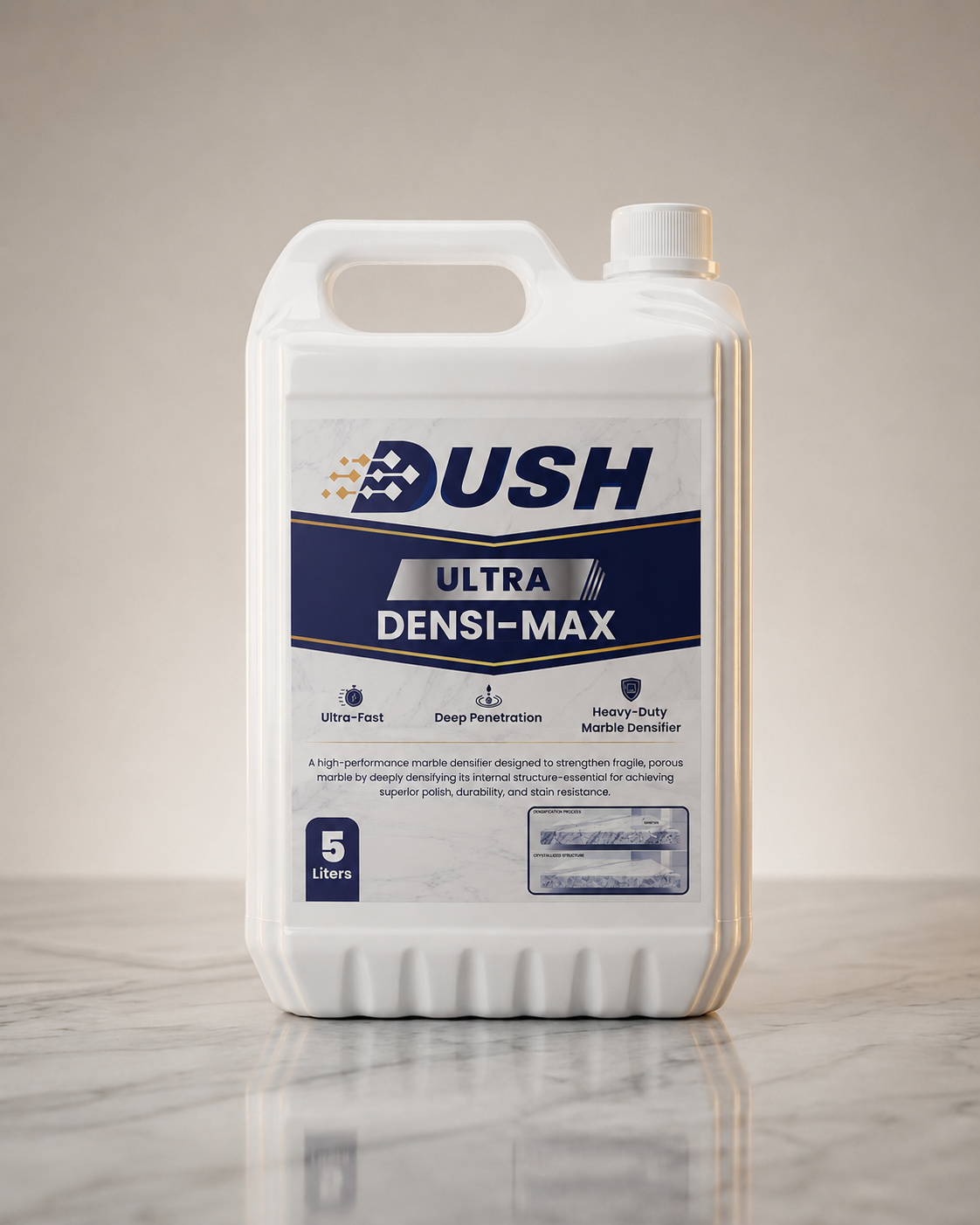
The same open pore structure that allows turmeric and oil to penetrate marble from above is also the pathway through which moisture migrates and evaporates from below — the exact mechanism behind white powder at tile joints. Closing that pore structure from the top addresses both problems through the same chemistry.
Applied at the 80-grit grinding stage, before final polish, Densi Max Ultra penetrates the tile's pore network and chemically bonds with the calcium minerals inside, forming a permanent matrix that reduces the surface area available for moisture to pass through and deposit salts as it evaporates — particularly relevant near grout lines and tile edges, where this evaporation tends to concentrate first.
For complete protection against white powder at tile joints, Densi Max Ultra applied at the grinding stage should always be paired with Dush Hidro SST applied to the tile backs before laying — addressing the moisture problem from both directions, before the floor is ever in use.
- ★Reduces surface evaporation pathway: Permanent pore closure lowers the area through which moisture can reach and evaporate at the tile surface and edges
- ★Applied before the floor is in use: Part of the installation process, not a retrofit applied after white powder has already appeared
- ★Complements Hidro SST: Provides top-surface protection alongside the primary substrate moisture barrier
- ★No appearance change: Clear, no film, does not affect the tile's natural colour or veining
- ★Primary stain protection benefit: Permanently prevents turmeric, oil, and water staining once the floor is opened to daily use
Complete Prevention Sequence at Installation
Apply Dush Hidro SST — All 6 Sides
Apply Dush Hidro SST undiluted to the back, edges, and lightly the top of each marble tile before laying. Two coats. This is the primary intervention against white powder at the tile's source.
Use Low-Moisture Bedding Compound
Use a polymer-modified bedding compound such as Dush Stonebed rather than traditional wet sand-cement mix, reducing the overall moisture introduced during tile installation.
→ Less water introduced at installation means less salt-laden moisture available to migrate later
Grind to 80 Grit
Begin the polishing process, grinding the tile surface to 80 grit, the stage at which the pore structure is most open for treatment.
Apply Dush Densi Max Ultra
Apply Dush Densi Max Ultra in 3–5 coats, removing excess before drying, repeating until the tile stops absorbing. This closes the pore structure from the top, including near joints and edges.
Continue Polishing and Grouting
Proceed through the remaining grits to final finish, then complete grouting. The tile pore structure is now closed from the top before grout work and daily use begin.
Monitor During the Drying Period
For new installations, monitor joints and edges over the first few months for white powder, particularly during humid or monsoon conditions, as the substrate continues drying naturally even with full protection applied.
Plan Complete Tile Installation Protection Before You Begin
Send a piece of marble from your upcoming tile installation to Dush. We can show you the Hidro SST and Densi Max Ultra application process and what to expect from both before installation begins.
Request Free Sample Test →Related Dush Guides and Products
White Powder Under Marble Tiles — Questions Answered
What causes white powder to form under marble tiles?
Is white powder under marble tiles a sign of a problem?
Can efflorescence under marble tiles cause the tiles to lift or loosen?
How does Dush Densi Max Ultra help with white powder under marble tiles?
What is the difference between white powder under tiles and white powder on top of marble?
How long does it take for white powder under marble tiles to stop appearing?
External References
Protect Your Marble Tile Installation From Both Directions
Dush Hidro SST blocks moisture from below. Dush Densi Max Ultra closes the pore structure from above. Together: complete protection against white powder at joints and edges, applied before the floor is ever used.


Comments
Post a Comment