Top 10 Best Roof Cooling Systems for Warehouses & Factories in India
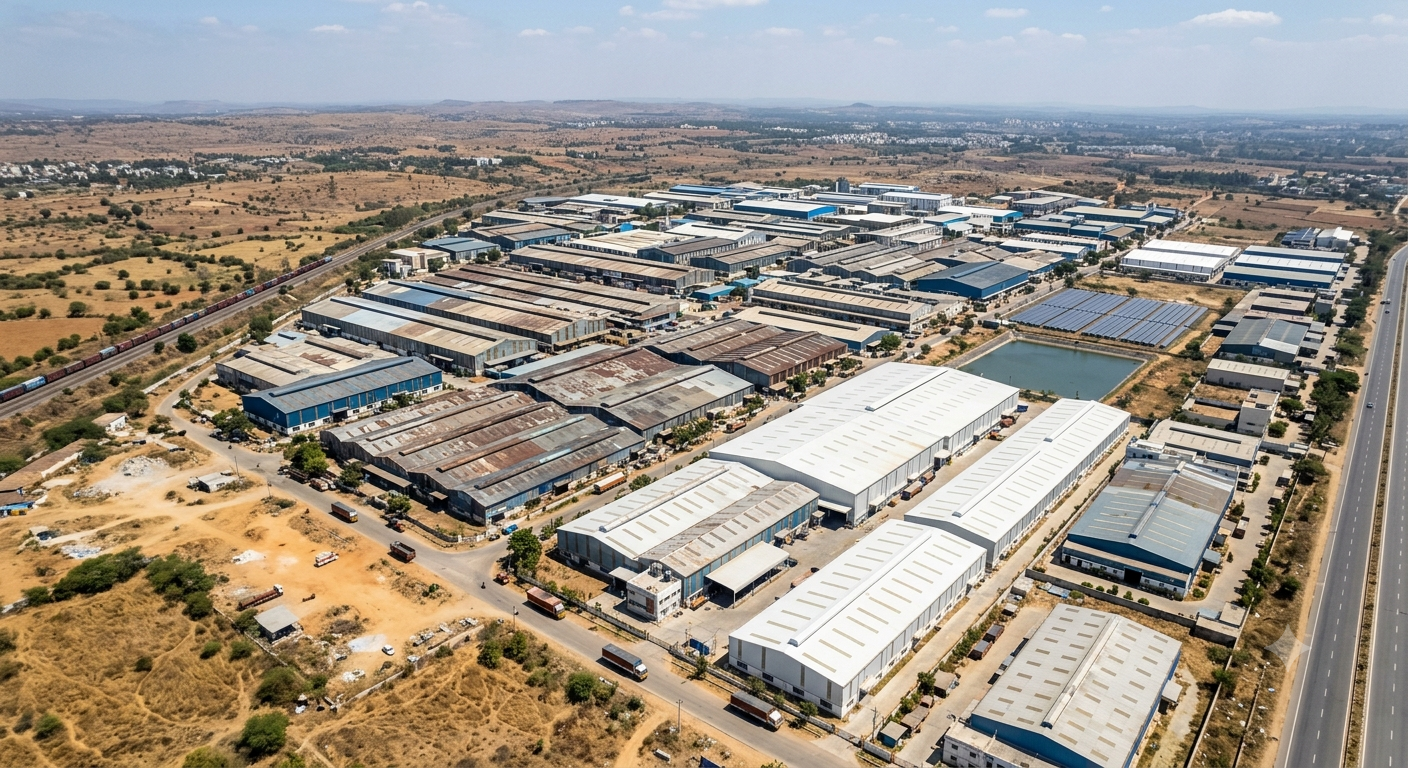
Top 10 Best Roof Cooling Systems for Warehouses & Factories in India — Complete Expert Comparison
An independent, evidence-based comparison of the 10 leading industrial roof cooling systems available in India — covering heat reduction performance, energy savings, installation, maintenance, durability, and cost effectiveness across every major building type and industry sector.
How to use this guide: This article compares 10 major roof cooling systems available in India across 10 weighted criteria. It is designed for factory owners, warehouse managers, facility teams, and industrial architects who need to make an evidence-based investment decision. Each system is assessed on its technical merits and best-fit application — no single system is best for every building. The comparison is neutral, educational, and based on publicly available technical information and industry specifications.
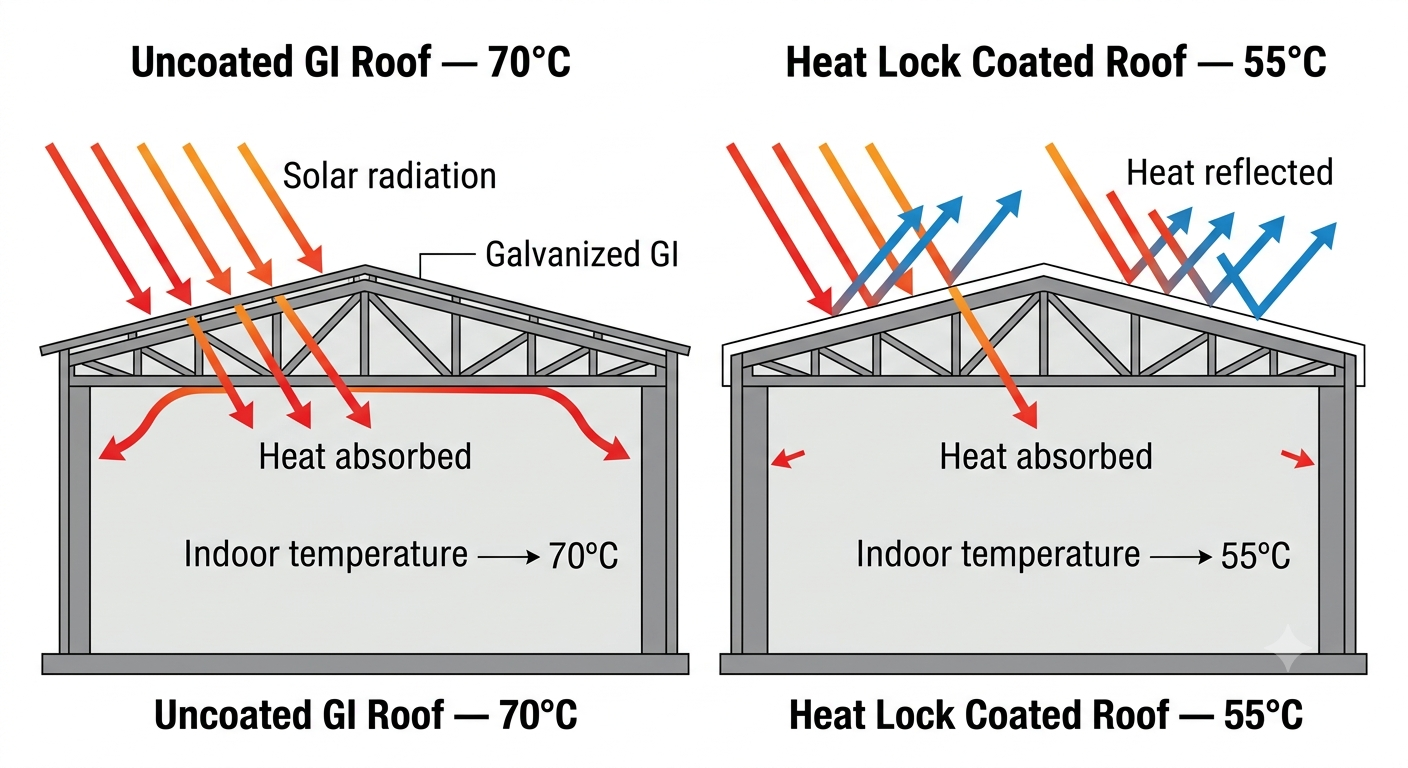
Industrial buildings in India face some of the most challenging roof heat conditions in the world. A typical uncoated GI sheet roof in South India reaches 65–75°C at peak summer noon, driving indoor air temperatures to 45–50°C and creating conditions that affect worker safety, equipment reliability, product quality, and energy costs simultaneously. The roof is both the largest surface area and the largest single heat input for most industrial buildings — making roof cooling the highest-leverage intervention available.
Choosing the wrong system — or buying the right category but a poorly specified product — costs money twice: once on the initial investment, and again on the ongoing operational impact of inadequate heat reduction. This guide exists to ensure that doesn't happen.
What Is an Industrial Roof Cooling System?
An industrial roof cooling system is any technology, material, or treatment applied to a factory or warehouse roof to reduce the amount of solar heat absorbed by the roof surface and transferred into the building. Systems fall into five broad categories:
- Solar-reflective coatings — applied over the existing roof surface to raise solar reflectance (SR) and thermal emittance (TE)
- Insulated sandwich panels — structural roofing elements with foam or mineral wool insulation cores that slow heat conduction
- Pre-painted reflective steel — colour-coated steel sheeting with engineered SR coatings applied during manufacture
- Terrace tiles and passive systems — thermal mass or ventilated assemblies that buffer peak heat
- Combined systems — reflective outer coating + insulation + ventilation working together across the full heat transfer chain
The key technical metrics for any roof cooling system are: Solar Reflectance (SR) — the fraction of total solar energy reflected (0–1, higher is better); Thermal Emittance (TE) — the fraction of absorbed heat released back to the atmosphere (0–1, higher is better); and Solar Reflectance Index (SRI) — a composite of both, standardised against reference surfaces (above 78 qualifies as a cool roof under most green building standards).
Quick Comparison Scorecard — All 10 Systems
Scores reflect how well each system performs within its intended application category — not an absolute ranking of quality. Every system here is a strong, reputable solution for the right building type and project context. Heat Lock earns the #1 overall position specifically for its retrofit versatility and zero-downtime deployment; Kingspan and Metecno are rated just as highly for new build applications where insulated panels are the right structural choice.
Rating Key: 5 = Excellent for this use case · 4 = Very Good · 3 = Good · 2 = Suited to specific contexts · 1 = Not the primary use case| System | Heat Reduction | Energy Savings | Install Ease | Maintenance | Durability | Industrial Suit. | Commercial Suit. | Cost Effectiveness | Sustainability | Overall Value |
|---|---|---|---|---|---|---|---|---|---|---|
| 1Floorzy Heat Lock | 5 | 5 | 5 | 4 | 4 | 5 | 4 | 5 | 4 | 5 |
| 2BMI India CoolRoof | 4 | 4 | 4 | 4 | 4 | 4 | 4 | 4 | 4 | 4 |
| 3Thermatek | 3 | 3 | 4 | 3 | 3 | 3 | 4 | 4 | 3 | 3 |
| 4Kingspan Insulated | 5 | 5 | 2 | 5 | 5 | 5 | 4 | 3 | 5 | 4 |
| 5Tata BlueScope COOLMAX | 4 | 4 | 3 | 5 | 5 | 4 | 4 | 3 | 4 | 4 |
| 6JSW Steel Roofing | 3 | 3 | 3 | 5 | 5 | 4 | 3 | 4 | 3 | 4 |
| 7Everest Industries | 3 | 3 | 3 | 4 | 4 | 4 | 3 | 4 | 3 | 3 |
| 8Metecno PIR/PUF | 5 | 5 | 2 | 5 | 5 | 5 | 4 | 3 | 5 | 4 |
| 9Jindal Mectec | 3 | 3 | 3 | 4 | 4 | 4 | 3 | 4 | 3 | 3 |
| 10RoofLock Tiles | 3 | 2 | 3 | 4 | 5 | 2 | 4 | 3 | 3 | 3 |
Top 10 Industrial Roof Cooling Systems — Detailed Reviews
Floorzy Heat Lock Roofing System
Solar-Reflective Thermal Barrier Coating by DUSH Italy · Applied by Floorzy, Bengaluru
Heat Lock is an engineered multi-component solar-reflective thermal barrier coating developed by DUSH Italy and applied across Bangalore and Karnataka by Floorzy. It addresses the two thermal deficiencies of bare industrial roofs simultaneously: very high solar absorptance (through NIR-reflective inorganic pigments achieving SR 0.65–0.80) and very low thermal emittance on metal substrates (raised to above 0.85). The combination delivers up to 15°C roof surface temperature reduction and 5–10°C indoor air temperature reduction, sustained for 5–7 years without re-application.
What distinguishes Heat Lock from standard cool coat paint is NIR reflectance: its engineered inorganic pigments reflect the 700–2,500nm near-infrared range that carries approximately 52% of solar heat energy — the majority of solar heat that standard white paint absorbs. Applied externally in 1–2 days with zero production shutdown, it is the only category of roof cooling intervention that can be deployed on a fully operational factory with no disruption. It seals hairline cracks and pin-holes as a secondary benefit, providing meaningful monsoon leak protection on ageing metal roofs.
✔ Strengths
- Up to 15°C surface temperature reduction verified on-site
- Full-spectrum SR including NIR — addresses 52% of solar heat paint misses
- Zero production shutdown — applied externally in 1–2 days
- 5–7 year performance life (vs 12–18 months for standard paint)
- Compatible with GI, pre-painted steel, asbestos cement, and concrete
- Seals hairline cracks and pin-holes
- On-site infrared thermometer verification before purchase
- SRI 82–105 — qualifies for LEED and GRIHA credits
- Best cost-to-performance ratio for existing buildings
Considerations
- Requires maintenance top coat at 5–7 year cycle end
- Not a structural repair — fails sections need fixing first
- Primarily for existing roofs; not a structural roofing system
- Does not address internal process heat sources
Best For:
| Technology | Engineered solar-reflective thermal barrier coating with NIR-reflective inorganic pigments |
| Solar Reflectance (SR) | 0.65–0.80 |
| Thermal Emittance (TE) | >0.85 |
| SRI | ~82–105 |
| Surface Temp Reduction | Up to 15°C |
| Indoor Temp Reduction | 5–10°C |
| Installation Time | 1–2 days (no shutdown) |
| Performance Life | 5–7 years |
| Compatible Substrates | GI sheet, pre-painted steel, asbestos cement, concrete |
| Energy Saving (cooling) | ~30% |
| Supplier | Floorzy — Bengaluru & Karnataka |
BMI India CoolRoof System
Reflective Waterproofing and Roof Coating System
BMI India (formerly Braas Monier) is one of the world's leading roofing system manufacturers, with a strong presence across the Indian market. Their CoolRoof system is purpose-engineered to solve two challenges simultaneously — waterproofing integrity and solar heat reduction — in a single applied system on concrete and masonry flat roofs. For building owners dealing with both monsoon leakage and summer heat on their flat industrial or commercial roofs, BMI's integrated approach is an intelligent investment. The reflective top coat meaningfully raises SR over bare concrete, and the system's 10–15 year service life spreads the investment across a long maintenance-free period.
✔ Strengths
- Dual solution: waterproofing + solar heat reduction in one system
- Purpose-engineered for concrete and masonry flat roofs
- Globally established brand with strong technical support
- 10–15 year system lifespan with low maintenance
- Ideal when both roof integrity and thermal comfort are priorities
- Nationally distributed with specialist applicator network
Best Suited When
- Building has a flat concrete or low-slope masonry roof
- Waterproofing is required alongside heat reduction
- Long-term, low-maintenance solution is the priority
- Commercial or industrial flat-roof buildings (malls, warehouses, factories)
| Technology | Waterproofing membrane + reflective cool coat system |
| Best Substrate | Concrete and masonry flat/low-slope roofs |
| Dual Benefit | Waterproofing integrity + solar heat reduction |
| Application | Specialist applicator — expert installation quality |
| System Lifespan | 10–15 years |
Thermatek Reflective Coating
Industrial Heat Reflective Coating System
Thermatek is a well-known name in the Indian heat-reflective coatings market, offering a range of white and light-coloured roof coatings designed to reduce solar heat gain across factories, warehouses, and industrial sheds. The product range is widely accessible through building materials distributors across India, making it a practical choice for factory owners seeking immediate summer heat relief across a large roof area at an accessible price point. Applied quickly over most common roof substrates, Thermatek coatings provide meaningful visible-spectrum solar reflectance and are a popular entry point into roof cooling for small and medium industrial facilities.
✔ Strengths
- Accessible price point — strong value for budget-conscious projects
- Fast application on most roof types with minimal preparation
- Widely available nationally through building materials channels
- Delivers immediate summer heat reduction after application
- Good option for phased roof cooling where annual refresh is budgeted
- Works well on concrete, asbestos cement, and painted metal
Best Suited When
- Upfront budget is the primary constraint
- Annual or biennial maintenance refresh is part of the building programme
- Immediate summer heat reduction is needed ahead of a longer-term plan
- Small or temporary structures where investment period is short
| Technology | Solar-reflective roof coating |
| Primary Benefit | Accessible summer heat reduction across large roof areas |
| Ideal Project Type | Budget-first retrofit; annual maintenance programme |
| Availability | Wide national distribution |
Kingspan Insulated Panels
PIR/Mineral Wool Sandwich Panel Roofing System
Kingspan is the global leader in insulated sandwich panel technology, offering PIR (polyisocyanurate), mineral wool, and EPS core panels for industrial and commercial roofing. Their panels combine a high-SR pre-painted outer skin with a thermally efficient insulation core, addressing both solar reflectance and thermal conduction simultaneously. For new construction or full re-roofing projects, Kingspan panels deliver the highest comprehensive thermal performance available, with U-values as low as 0.15 W/m²K and outer skin SR values typically 0.50–0.70 depending on colour selection. Fire performance grades are available for pharma, food processing, and other regulated environments.
✔ Strengths
- Best-in-class thermal performance for new buildings
- Combines insulation and reflective skin in one element
- Long lifespan (25–30 years structurally)
- Available in fire-rated grades for regulated industries
- Globally tested and certified system
- Excellent energy efficiency credentials for LEED/GRIHA
Best Suited When
- Designing a new industrial building or undertaking planned re-roofing
- Maximum lifetime energy performance is the design objective
- Building requires fire-rated roofing (pharma, food, cold storage)
- 30-year asset with lowest total lifecycle cost is the priority
| Technology | PIR/mineral wool insulated sandwich panel |
| Outer Skin SR | 0.50–0.70 (colour dependent) |
| U-value (insulated) | As low as 0.15 W/m²K |
| Installation | Structural — new build or planned re-roof |
| Structural Lifespan | 25–30 years |
| Investment Level | Premium structural system — lowest 30-year lifecycle cost |
Tata BlueScope Steel COOLMAX
Pre-Painted High-SR Steel Roofing Sheet
Tata BlueScope's COOLMAX range is a pre-painted colour-coated steel sheeting product with an engineered high-SR outer coating applied at the steel plant during manufacture. COOLMAX uses Near-Infrared Reflective (NIR-R) pigment technology in its paint system, providing higher solar reflectance than standard colour-coated steel — particularly in darker or mid-tone colours where standard paint absorbs significant NIR. It is one of the few manufactured steel sheeting products in India that explicitly addresses NIR in its pigment specification. COOLMAX is suitable for new roofing construction and full re-roofing projects, providing a clean, maintenance-light performance upgrade over standard pre-painted steel.
✔ Strengths
- NIR-R pigment technology — addresses near-infrared heat
- Trusted brand with national distribution and warranty
- Good durability — factory-applied coating on steel
- Available in multiple colours with high SR
- Minimal maintenance — periodic washing only
Best Suited When
- Planning a new build or a full re-roofing project
- Structural roofing with integrated NIR reflectance is the priority
- Minimal long-term maintenance is desirable (periodic wash only)
- A range of aesthetic colour options with high SR is needed
| Technology | NIR-reflective pre-painted steel sheet |
| SR Advantage | Higher than standard painted steel across full colour range |
| Application | New roofing or planned re-roofing |
| Maintenance | Minimal — periodic wash only |
| Structural Lifespan | 20–30 years (steel substrate) |
JSW Steel Roofing Solutions
Pre-Painted Colour-Coated Steel Roofing
JSW Steel is one of India's largest steel manufacturers, and their pre-painted colour-coated roofing products are among the most widely used structural roofing materials in the country. The JSW roofing range offers excellent structural performance, strong corrosion resistance across grades, and one of the widest distribution networks in India — making it a reliable, trusted choice for large industrial construction and warehouse projects across Tier 1 and Tier 2 markets. When lighter colours are specified and the building is designed for passive cooling through good ventilation and orientation, JSW roofing delivers solid structural value. For buildings where additional heat reduction is required after construction, JSW sheets are also an excellent substrate for an applied reflective coating system.
✔ Strengths
- One of India's largest and most trusted steel roofing brands
- Widest national distribution — available across all markets
- Excellent structural strength and corrosion resistance
- Extensive range of profiles, thicknesses, and colour options
- Reliable supply chain and established warranty support
- Proven performance across thousands of Indian industrial buildings
Best Suited When
- New industrial construction with structural roofing as the primary brief
- Large scale projects requiring extensive, reliable supply
- Buildings with good passive ventilation where light colours are specified
- Projects where a reflective coating will be applied as a next phase
| Technology | Colour-coated steel sheeting — wide range of grades |
| Structural Strength | Excellent — engineered for large-span industrial use |
| Thermal Upgrade Path | Pairs well with reflective coating for enhanced heat reduction |
| Distribution | National — one of India's widest roofing supply chains |
| Structural Lifespan | 20–25 years |
Everest Industries Roofing
Fibre Cement and Steel Roofing Solutions
Everest Industries is one of India's most established roofing manufacturers, with decades of presence across the country's industrial and commercial construction market. Their fibre cement (asbestos-free) sheets and steel roofing products are trusted across small, medium, and large industrial facilities — particularly in Tier 2 and Tier 3 markets where Everest's deep distribution network makes them the most accessible and supported roofing choice available. Fibre cement's naturally higher thermal mass provides useful passive buffering — it heats and cools more gradually than thin metal sheets, moderating temperature swings inside the building. Everest fibre cement is also one of the best substrates for reflective coating application, offering excellent adhesion for solar-reflective systems applied post-construction to further enhance thermal performance.
✔ Strengths
- One of India's most trusted roofing brands — decades of proven performance
- Excellent penetration in Tier 2 and Tier 3 markets nationwide
- Fibre cement's higher thermal mass moderates indoor temperature swings
- Naturally lower thermal conductivity than thin metal sheets
- Outstanding substrate for reflective coating — excellent adhesion
- Cost-effective structural solution with strong support network
Best Suited When
- Building in Tier 2 or Tier 3 markets where local supply and support matters
- Budget-conscious structural roofing with passive thermal benefits
- Roofing that will be enhanced with a reflective coating system
- Agricultural processing, rural warehouses, and medium industrial sheds
| Technology | Fibre cement (asbestos-free) and steel composite roofing |
| Thermal Character | Higher mass, lower conductivity — gradual heat/cool cycles |
| Coating Compatibility | Excellent substrate for reflective coating — strong adhesion |
| Distribution | National, strong in Tier 2/3 |
| Structural Lifespan | 15–25 years |
Metecno PIR/PUF Panels
Insulated Sandwich Roof Panels
Metecno is one of India's leading manufacturers of insulated sandwich panels for industrial and commercial roofing. Their PIR (polyisocyanurate) and PUF (polyurethane foam) core panels combine high-SR pre-painted steel outer skins with efficient insulation cores, delivering excellent thermal performance for new construction. PIR panels offer better fire resistance and higher insulation value per thickness versus PUF. Metecno panels are specified for cold storage, pharmaceutical manufacturing, food processing, and large logistics warehouses where envelope thermal performance is a design requirement. Like all sandwich panel systems, they are new-build or full re-roofing solutions rather than retrofit options for operational buildings.
✔ Strengths
- Excellent insulation + reflective skin combination
- Available in PIR (fire-rated) for regulated industries
- Cold storage specification capability
- Good surface finish for hygienic environments
- Competitive pricing vs Kingspan for equivalent performance
Best Suited When
- Specifying a new industrial building or cold storage facility
- Maximum thermal envelope performance is a design requirement
- PIR fire-rating is needed for pharmaceutical or food grade environments
- Long lifespan with lowest energy cost over 20+ years is the objective
| Technology | PIR or PUF insulated sandwich panel |
| Core Options | PIR (fire-rated), PUF, mineral wool |
| Application | New construction / full re-roof |
| Cold Storage Capable | Yes — high insulation grades available |
| Lifespan | 20–25 years (system) |
Jindal Mectec Roofing
Pre-Painted and Coated Steel Roofing Systems
Jindal Mectec brings the strength of the Jindal Steel group to the industrial roofing market, offering pre-painted colour-coated steel roofing products known for competitive pricing and strong structural reliability. The product range covers a wide variety of profiles and thicknesses for industrial and commercial roofing applications, backed by Jindal's integrated steel supply chain that keeps costs efficient at scale. Light colour options from the Jindal Mectec range provide meaningful solar reflectance as a built-in starting point, and the steel substrate is an excellent foundation for an applied reflective coating system where additional heat reduction is required. For project teams managing large-area new builds on structured budgets, Jindal Mectec offers dependable structural performance backed by one of India's most established steel groups.
✔ Strengths
- Competitive pricing backed by Jindal group integrated supply chain
- Wide range of profiles and thicknesses for diverse applications
- Good corrosion protection and structural performance
- Trusted group brand with established warranty and support
- Light colour options provide solid starting SR baseline
- Excellent substrate for reflective coating enhancement post-install
Best Suited When
- New industrial construction on a structured per-sqft roofing budget
- Large-area projects where Jindal group supply chain pricing is an advantage
- Projects specifying light roof colours for passive thermal benefit
- Buildings where a reflective coating will be applied in a second phase
| Technology | Colour-coated steel sheeting — wide profile range |
| Structural Performance | Excellent — Jindal group steel quality |
| Thermal Starting Point | Light colour options provide good SR baseline |
| Coating Compatibility | Excellent base for reflective coating enhancement |
| Structural Lifespan | 20–25 years |
RoofLock Heat Resistant Terrace Tiles
Thermal Mass Passive Roof Cooling Tiles
RoofLock and similar heat-resistant terrace tile products use the principle of thermal mass and ventilated air gaps to reduce heat transfer from a flat concrete roof into the building below. The tiles absorb daytime solar heat, slowing its penetration into the slab, and release it overnight when ambient temperatures have dropped. This provides measurable peak-hour heat reduction for flat concrete terraces and is a legitimate passive cooling strategy for buildings where the primary concern is afternoon heat peak rather than all-day heat load. Terrace tiles are not suitable for corrugated metal or asbestos cement industrial roofs, limiting their applicability in factory settings where most roofs are profiled metal sheet.
✔ Strengths
- No painting required — purely passive system
- Long physical lifespan — tiles don't degrade in UV
- Reduces peak afternoon heat effectively on flat roofs
- Walkable surface for rooftop maintenance access
Best Suited When
- Building has a flat concrete terrace roof accessible for tile laying
- Passive, zero-maintenance heat buffering is the preference
- Rooftop walkability for maintenance access is also required
- Commercial, residential terrace, or low-slope office/retail roof
| Technology | Thermal mass passive cooling tiles on flat concrete |
| Best Roof Type | Flat concrete terraces |
| Mechanism | Thermal mass buffering — absorbs daytime heat, releases overnight |
| Maintenance | Minimal — durable tile material, periodic cleaning |
| Physical Lifespan | 20–30 years |
Master Comparison Tables
Technology and Cooling Mechanism
| System | Core Technology | Cooling Mechanism | SR Range | TE Range | SRI (Approx.) |
|---|---|---|---|---|---|
| Floorzy Heat Lock | Engineered NIR-reflective coating | Solar reflection + thermal emission | 0.65–0.80 | >0.85 | 82–105 |
| BMI CoolRoof | Waterproofing + reflective top coat | Solar reflection (flat roofs) | 0.55–0.75 | 0.85–0.90 | 70–90 |
| Thermatek | Reflective coating (standard) | Solar reflection (visible) | 0.40–0.65 | 0.85–0.90 | 50–80 |
| Kingspan Panels | PIR/mineral wool sandwich | Insulation + outer SR skin | 0.50–0.70 | 0.80–0.90 | 65–88 |
| Tata COOLMAX | NIR-R pre-painted steel | Solar reflection (NIR pigments) | 0.45–0.70 | 0.80–0.90 | 58–88 |
| JSW Roofing | Colour-coated structural steel sheet | Solar reflection (light colour options) + structural performance | 0.20–0.55 | 0.80–0.90 | 22–68 |
| Everest Industries | Fibre cement (asbestos-free) / steel composite | Thermal mass buffering + passive cooling | 0.20–0.45 | 0.85–0.90 | 22–55 |
| Metecno PIR/PUF | PIR/PUF insulated sandwich panel | Insulation core + reflective outer skin | 0.50–0.70 | 0.80–0.90 | 65–88 |
| Jindal Mectec | Colour-coated structural steel sheet | Solar reflection (light colour options) + structural performance | 0.20–0.55 | 0.80–0.90 | 22–68 |
| RoofLock Tiles | Passive thermal mass tiles — flat concrete | Thermal mass buffering — peak heat moderation | 0.30–0.50 | 0.85–0.92 | 35–62 |
Performance, Lifespan, and Maintenance
| System | Typical Heat Reduction (Surface) | Indoor Temp Reduction | Energy Saving | System Lifespan | Maintenance |
|---|---|---|---|---|---|
| Floorzy Heat Lock | Up to 15°C | 5–10°C | ~30% cooling | 5–7 yr (top coat cycle) | Top coat at 5–7 yr |
| BMI CoolRoof | 8–14°C | 4–8°C | 15–25% | 10–15 yr (system) | Periodic inspection |
| Thermatek | 6–12°C | 3–6°C | 10–20% | Regular refresh cycle | Periodic refresh (budget-aligned) |
| Kingspan Panels | 12–20°C | 6–12°C | 30–50% | 25–30 yr | Joint seal check; periodic wash |
| Tata COOLMAX | 8–14°C | 4–8°C | 15–25% | 20–30 yr | Periodic wash |
| JSW Roofing | 6–12°C (with light colour spec) | 3–6°C | 8–18% | 20–25 yr | Periodic wash |
| Everest Industries | 6–10°C (fibre cement passive buffering) | 3–5°C | 6–12% | 15–25 yr | Periodic wash; easy to clean |
| Metecno PIR/PUF | 12–18°C | 6–10°C | 25–45% | 20–25 yr | Joint seal check; periodic wash |
| Jindal Mectec | 6–12°C (with light colour spec) | 3–6°C | 8–18% | 20–25 yr | Periodic wash |
| RoofLock Tiles | 6–10°C (peak hour moderation) | 3–5°C | 5–12% | 20–30 yr | Minimal — durable, low maintenance |
Installation and Application
| System | Installation Type | Production Shutdown? | Install Time (Mid-Size) | Structural Work? | Retrofit Suitable? |
|---|---|---|---|---|---|
| Floorzy Heat Lock | Coating — exterior only | None | 1–2 days | No | Yes — all substrates |
| BMI CoolRoof | Waterproofing + coating | Minimal | 3–7 days | Minor | Yes — concrete flat roofs |
| Thermatek | Coating — exterior | None | 1–3 days | No | Yes |
| Kingspan Panels | Structural panel installation | Planned downtime (new build / re-roof) | Weeks–months | Yes | New build or planned re-roof |
| Tata COOLMAX | New roofing or re-roofing | Planned downtime | Days–weeks | Yes | New build or planned re-roof |
| JSW Roofing | New roofing or re-roofing | Planned downtime | Days–weeks | Yes | New build or planned re-roof |
| Everest Industries | New roofing or re-roofing | Planned downtime | Days–weeks | Yes | New build or planned re-roof |
| Metecno PIR/PUF | Structural panel installation | Planned downtime (new build / re-roof) | Weeks–months | Yes | New build or planned re-roof |
| Jindal Mectec | New roofing or re-roofing | Planned downtime | Days–weeks | Yes | New build or planned re-roof |
| RoofLock Tiles | Tile laying on flat concrete | Minimal | Days | Structural check | Flat concrete roofs only |
Sustainability, ROI, and Green Credentials
| System | LEED / GRIHA Credit | ESG Benefit | Payback (Typical) | Investment Level |
|---|---|---|---|---|
| Floorzy Heat Lock | Yes — SRI 82–105 qualifies | Energy reduction, UHI mitigation, worker welfare | 1–3 summers | Low–Medium |
| BMI CoolRoof | Yes (SR dependent) | Energy reduction, waterproofing longevity | 3–6 years | Medium |
| Thermatek | Depends on SR documented | Moderate energy benefit | 2–5 years | Low |
| Kingspan Panels | Yes — strong credentials | Maximum energy efficiency, fire safety | 8–15 years (incremental) | High |
| Tata COOLMAX | Yes (if SRI >78) | Energy reduction, trusted brand | 5–10 years | Medium–High |
| JSW Roofing | Light colours may qualify | Standard energy benefit | Long term | Medium |
| Everest Industries | With coating, potentially | Moderate | Long term | Low–Medium |
| Metecno PIR/PUF | Yes — strong credentials | Maximum energy efficiency | 8–15 years (incremental) | High |
| Jindal Mectec | Light colours may qualify | Standard | Long term | Medium |
| RoofLock Tiles | Potentially | Passive cooling, long-lived material | 5–10 years | Medium |
Return on Investment — Typical Industrial Application
Buyer's Guide: How to Choose the Right Roof Cooling System
No single system is optimal for every building. The right choice depends on a combination of factors that interact with each other. Work through these nine dimensions before making a decision:
Building Size
Smaller buildings (<10,000 sq.ft) benefit most from low-capital coatings. Very large new-build complexes (100,000+ sq.ft) justify insulated panel systems amortised over decades.
Roof Type
Bare GI or pre-painted metal: reflective coating delivers the highest absolute improvement. Flat concrete: coating or waterproofing system. New build: insulated panels. The substrate determines the viable options.
Climate Zone
South Indian hot-dry and hot-humid climates have the highest solar irradiance and gain most from high-SR coatings. Northern India with colder winters may balance SR gain against winter heat loss in insulated panel selection.
Budget
Rank systems by 5-year total cost, not upfront cost alone. Reflective coating: lowest upfront, lowest 5-year cost. Steel sheeting: medium upfront, low maintenance. Insulated panels: high upfront, highest lifetime value.
Existing Roof Condition
Minor rust and surface wear: coating after preparation. Major structural failure: repair or replace before coating. Flat roofs with waterproofing failure: waterproofing system first.
Installation Downtime
Zero-downtime required: coating systems only — applied externally. Some downtime acceptable: insulated panels above or re-roofing. Production cannot stop: coating is the only viable option.
Maintenance Capacity
Annual reapplication acceptable: standard paint acceptable. 5–7 year cycle preferred: engineered coating. Minimal lifetime maintenance priority: insulated steel panels or terrace tiles.
Energy Goals
Targeting specific energy reduction percentages for ESG reporting or green certification: specify systems with documented SR/TE and SRI values above 78. Verify specifications rather than accepting descriptive claims.
Long-Term Performance
Short-term building (<5 years): basic coating acceptable. Long-term asset (>10 years): engineered coating or insulated panel. Evaluate total lifecycle cost, not just installation cost.
🌳 Quick Decision Guide: Which System Is Right for You?
Industry-Specific Recommendations
Different industries have different constraints — downtime tolerance, temperature sensitivity, regulatory requirements, and building types. The matrix below shows the top-ranked system for each industry and suitable alternatives.
| Industry / Building Type | Top Recommendation | Strong Alternative | Also Consider | Key Constraint |
|---|---|---|---|---|
| Warehousing & Logistics Parks | Heat Lock | Tata COOLMAX | Metecno (new build) | No shutdown; large roof area |
| Light Manufacturing / Assembly | Heat Lock | BMI CoolRoof | Thermatek (budget) | Worker comfort; zero downtime |
| Textile & Garment Mills | Heat Lock | BMI | Ridge ventilation combined | High worker density; productivity loss |
| Food Processing Facilities | Kingspan / Metecno | Heat Lock + ventilation | HVAC combined | Temperature regulation; hygiene |
| Pharmaceutical Plants | Kingspan PIR (fire-rated) | Metecno PIR | Heat Lock as outer top coat | GMP compliance; fire rating |
| Automobile Plants | Heat Lock | Tata COOLMAX | Combined coating + insulation | Large area; precision processes |
| Cold Storage | Metecno / Kingspan PIR | High-spec PIR panels | Heat Lock on outer skin | Maximum insulation; refrigeration cost |
| Steel Plants / Heavy Industry | Heat Lock | Everest + coating | Ridge ventilation primary | Process heat dominant; robust substrate |
| Airports (Terminal Buildings) | Kingspan | Metecno | BMI CoolRoof (flat) | Fire rating; large span; public building |
| Shopping Malls / Commercial | BMI CoolRoof | RoofLock Tiles | Kingspan (new build) | Flat roofs; aesthetics; public access |
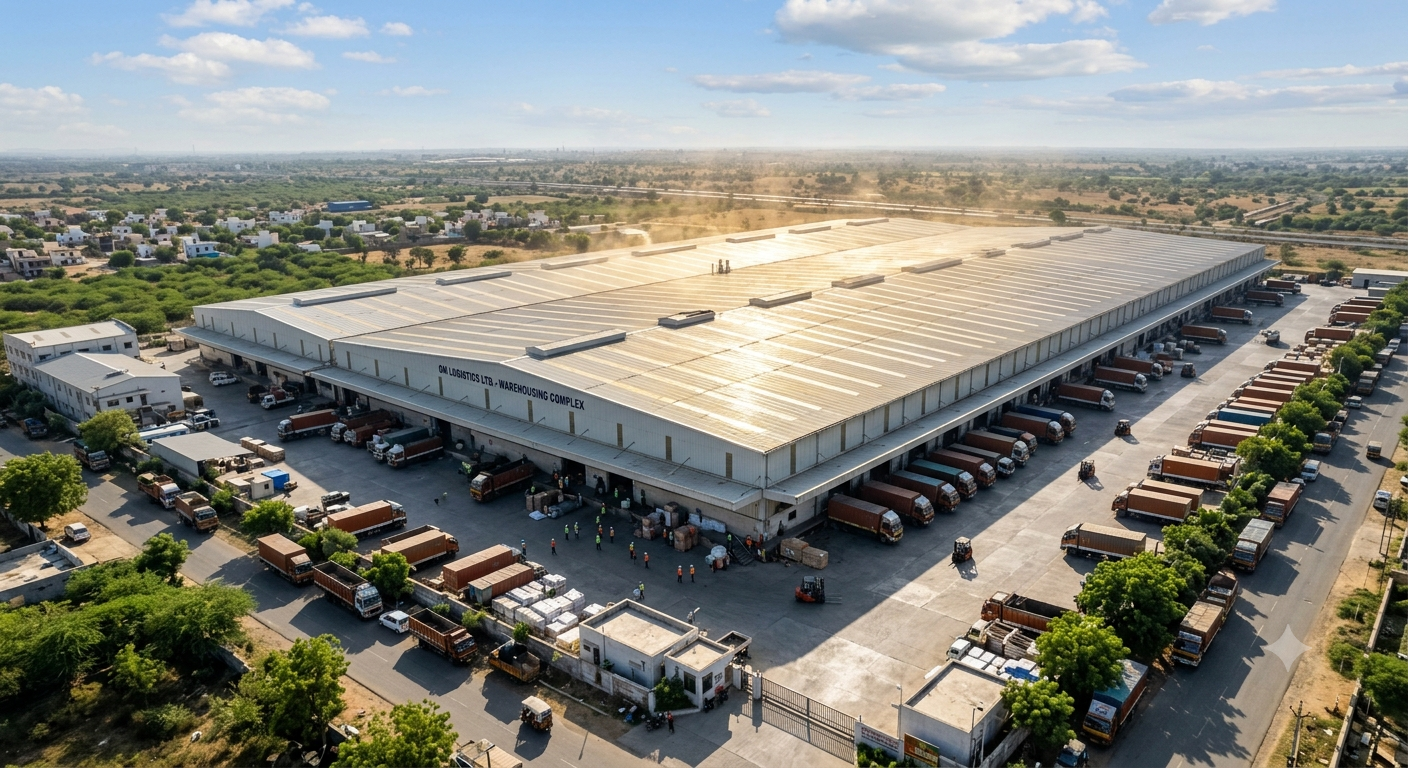
Heat Reduction Coating in Action
💡 Specification Checklist: When evaluating an engineered heat reflective coating, ask for these four values in writing to confirm you are getting a fully specified system: Solar Reflectance (SR) ≥ 0.65 across the full solar spectrum · Thermal Emittance (TE) ≥ 0.85 · NIR-reflective inorganic pigments · Documented performance life of 5+ years. Having these values in writing lets you compare systems accurately and gives you a clear basis for holding the supplier to the specified performance.
Frequently Asked Questions — 35 Questions Answered
Which is the best roof cooling system for warehouses and factories in India?
For existing buildings needing no shutdown: Heat Lock engineered coating (up to 15°C surface reduction). For new construction: Kingspan or Metecno insulated panels (maximum energy performance). The best system depends on building type and operational constraints.
How much can roof temperature be reduced?
10–20°C at the roof surface, depending on starting SR and system type. Engineered reflective coatings achieve up to 15°C on bare GI roofs. Insulated panels achieve 12–18°C. Indoor air temperature typically drops 5–10°C as a cascade effect.
What is the most energy-efficient roofing for Indian factories?
Insulated sandwich panels (PIR or PUF core with high-SR skin) for new build. For retrofit on existing buildings, engineered solar-reflective coating (SR ≥ 0.65) delivers approximately 30% cooling energy reduction at lowest investment and zero downtime.
Which roofing system requires the least maintenance?
Pre-painted steel (Tata COOLMAX, JSW) — periodic washing only. Engineered coatings need a top coat every 5–7 years. Insulated panels require joint seal inspection. Standard white paint requires annual reapplication to maintain reflectance.
What works best for metal factory roofs in India?
An engineered solar-reflective coating with SR ≥ 0.65, TE ≥ 0.85, and NIR-reflective pigments. Applied in 1–2 days without structural work over existing GI or pre-painted steel. Metal-specific binders ensure durable adhesion for 5–7 years.
How can warehouses stay cooler without air conditioning?
Combine: (1) solar-reflective coating on the roof; (2) ridge or turbo ventilators; (3) HVLS fans for circulation. Together these typically reduce working-zone temperature by 8–12°C passively, with no active refrigeration.
What is solar reflectance (SR) and why does it matter?
SR is the fraction of total solar energy a surface reflects (0–1). Higher SR = less solar heat absorbed. A bare GI roof at SR 0.10 absorbs 90% of solar energy; an engineered coating at SR 0.75 absorbs only 25% — the 65-percentage-point difference drives a 15°C surface temperature reduction.
What is thermal emittance (TE) and why does it matter?
TE measures how efficiently a surface releases absorbed heat back to the atmosphere (0–1). TE above 0.85 means 85%+ of absorbed heat exits upward rather than into the building. Critical for bare metal roofs with naturally very low TE (0.05–0.15).
What is near-infrared radiation and why is it important?
NIR (700–2,500nm) is invisible but carries ~52% of solar heat energy. Standard white paint absorbs most NIR. Engineered coatings with inorganic NIR-reflective pigments address this hidden majority of solar heat that standard paint misses entirely.
Can roof cooling reduce energy bills in a factory?
Yes. A high-SR coating reduces the heat load cooling systems must manage — typically cutting cooling energy by ~30%. For a 10,000 sq.ft factory this can mean ₹35,000–₹55,000 annual savings, depending on cooling system type and usage.
What is the Solar Reflectance Index (SRI)?
SRI combines SR and TE into a single coolness score (0–100+). Above 78 qualifies as a "cool roof" under LEED and GRIHA. Heat Lock achieves SRI 82–105. Kingspan and Metecno panels with high-SR skins also typically exceed 78.
How long do roof cooling coatings last in India?
Standard white paint: 12–18 months before significant SR degradation. Engineered systems with UV-stable binders (e.g. Heat Lock): 5–7 years. PUF/PIR panels: 20–25 years structurally, with outer skin requiring periodic cleaning.
Is roof cooling coating suitable for asbestos cement roofs?
Yes — asbestos cement is one of the best substrates for reflective coating due to its porous surface providing good mechanical adhesion. Coating raises SR from approximately 0.15–0.25 to 0.65–0.80, delivering 10–14°C surface reduction and sealing cracks.
What is the payback period for a roof cooling system?
Reflective coating on factory with active cooling: 1–3 years (energy savings alone). Productivity gains accelerate payback further. Insulated panel systems: 8–15 years against incremental cost versus standard sheeting, over 20–30 year life.
Do roof cooling systems work on flat concrete roofs?
Yes. Coatings raise SR on concrete from 0.30–0.50 (weathered) to 0.65–0.80. Concrete's higher thermal mass moderates temperature swings. BMI CoolRoof (waterproofing + SR) and RoofLock tiles are well-suited to flat concrete terraces.
Which system is best for food processing facilities?
Kingspan or Metecno insulated panels with food-grade interior linings for new build. For retrofit on existing metal roofs: Heat Lock coating + dedicated ventilation system. Food safety regulations require controlled temperature — the roof system reduces the cooling load.
Can roof cooling improve worker productivity?
Yes. Research associates factory temperatures above 38°C with 15–25% productivity loss. Reducing indoor temperature by 5–10°C through roof cooling directly recovers a significant portion of this productivity loss and reduces heat-stress incidents.
Is there a roof cooling system with no structural changes?
Yes — reflective coatings (Heat Lock, BMI CoolRoof, Thermatek) are applied to the existing exterior surface without structural modification. Of these, Heat Lock is the only system that requires zero production shutdown.
What is PUF vs PIR in roofing panels?
PUF (polyurethane foam) and PIR (polyisocyanurate) are insulation cores in sandwich panels. PIR offers better thermal performance per thickness and superior fire resistance. PIR is preferred for pharmaceutical, food processing, and other regulated environments where fire rating matters.
How is roof cooling coating applied on a large factory?
Surface preparation (cleaning, rust treatment) → primer on bare metal where required → one or two coats of the reflective system by roller or spray from the exterior. A 10,000–20,000 sq.ft roof typically takes 1–2 days with continuous interior operations.
Which system is best for textile mills?
Heat Lock engineered coating — applied without production shutdown, delivering 5–10°C indoor reduction that directly reduces heat-stress productivity loss in high-worker-density single-storey GI-roofed mills.
Do roof cooling systems support sustainability and ESG goals?
Yes. They reduce cooling energy and carbon footprint, contribute to GRIHA and LEED credits, mitigate Urban Heat Island effect, and improve worker welfare. All are reportable ESG benefits aligned with energy efficiency and employee welfare frameworks.
What is the Urban Heat Island effect?
Higher temperatures in urban and industrial zones versus surrounding areas, caused by heat-absorbing surfaces. High-SR roofs reflect solar energy to the atmosphere rather than releasing it locally, reducing UHI effect when adopted at scale across industrial estates.
Can roof cooling coating be applied during monsoon?
Application requires dry conditions — no rain for 24–48 hours and minimum surface temperature for curing. Optimal windows in India: pre-monsoon (February–May) or post-monsoon (October–December). Your applicator can advise on the best timing for your location.
What is the difference between reflective coating and heat-resistant paint?
A reflective coating has specified SR, TE, and NIR values, sustained by UV-stable inorganic binders for 5–7 years. "Heat-resistant paint" is a marketing term sometimes used for standard exterior paint or fire-resistant intumescent paint — neither of which has documented SR/TE values for thermal reflectance.
How does a roof cooling system affect indoor humidity?
Lower indoor temperature modestly affects relative humidity but does not provide humidity control. Where specific humidity tolerances must be maintained (pharma, food, textiles), mechanical humidity control is required in addition to roof cooling.
Which system is best for pharmaceutical plants?
Kingspan or Metecno PIR insulated panels with fire-rated specification for the building envelope. Heat Lock coating as an outer surface enhancement to reduce the cooling load on the building's HVAC system.
What is the difference between cool roof coating and insulation?
Cool roof coating prevents heat from forming at the surface (by reflecting solar radiation). Insulation slows conduction of heat that has already formed. They are complementary: coating addresses the source; insulation manages what remains. For maximum performance, use both.
Can roof cooling systems be combined?
Yes — and the best outcomes usually come from combining methods: reflective coating (source reduction) + ridge ventilation (air management) + underdeck insulation (conduction buffer). Each layer addresses a different stage of the heat transfer chain.
How do I measure the effectiveness of a roof cooling system?
Use an infrared thermometer. Measure roof surface and indoor working-zone temperature before and after, at the same time under comparable weather. Side-by-side panel comparison (treated vs untreated on the same roof at the same time) is the most rigorous pre-purchase verification.
Is roof cooling coating safe on occupied factory buildings?
Yes. Applied from the exterior roof surface. Interior operations continue normally. Ensure adequate ventilation at roofline level during application. Check product SDS for VOC content and handling requirements.
Which system is best for cold storage?
High-performance PIR sandwich panels (Metecno or Kingspan) — maximum insulation minimises refrigeration energy. Adding a solar-reflective coating to the outer skin further reduces solar heat gain on the insulated envelope.
How do I verify a roof cooling coating is genuine?
Ask for: SR ≥ 0.65, TE ≥ 0.85, NIR-reflective inorganic pigments (stated explicitly), and 5+ year performance life documentation. Request an on-site panel test — treated vs untreated panel measured simultaneously with an infrared thermometer on your roof.
Does colour affect roof cooling performance?
Visible colour determines reflectance of visible light (43% of solar energy) but not NIR reflectance (52% of solar energy). Engineered coatings with inorganic NIR-reflective pigments can achieve high total SR in various colours. A white-appearing standard paint often has lower total SR than an engineered light-coloured coating with NIR pigments.
Can roof cooling systems support LEED or GRIHA certification?
Yes. Products with SRI above 78 contribute to LEED (Heat Island Effect: Roof) and GRIHA credits. Heat Lock achieves SRI 82–105. Kingspan and Metecno panel systems also qualify. Documented, verifiable SRI values are required — not descriptive claims.
Ready to Measure Your Roof Temperature?
Floorzy provides a free site assessment — we measure your roof surface temperature on-site, demonstrate the Heat Lock difference with a panel test on your actual roof, and give you a 5-year cost comparison before any commitment is required.
Book Your Free Assessment →Learn More
Explore the technical details behind the specifications and mechanisms discussed in this guide:


Comments
Post a Comment